Get the next document by email
One new document a month on shipping code that agents write.
 note · 2026-09-15
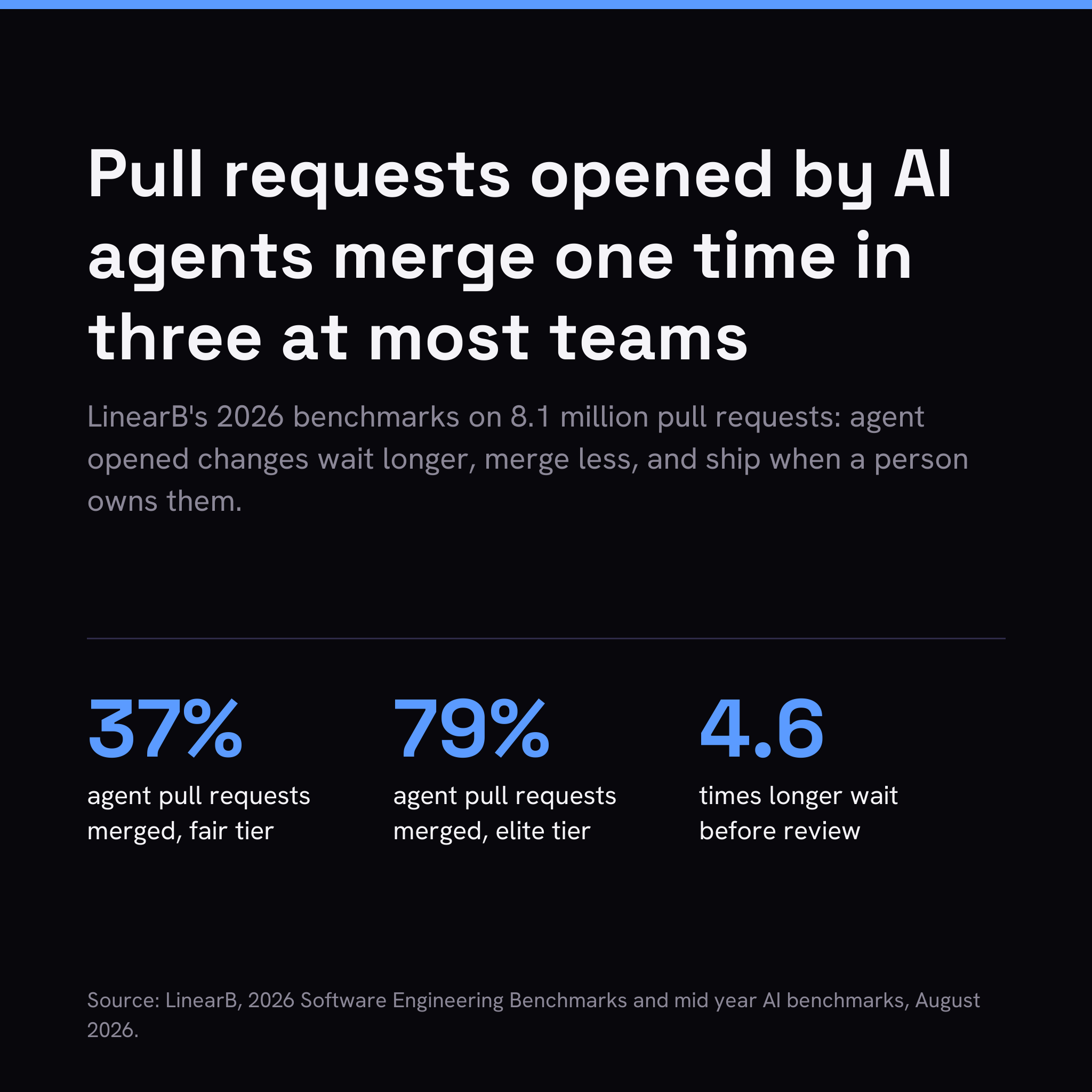
Pull requests opened by AI agents merge one time in three at most teams
LinearB's 2026 benchmarks on millions of pull requests show agent opened changes merging at 37% in fair organizations and 79% in elite ones, waiting 4.6 times longer for review, and shipping when a person owns them. Roc Rizzardini on what that means for a software factory.
For founders and CTOs building or buying a software factory, and the engineers who review what it producesRead the note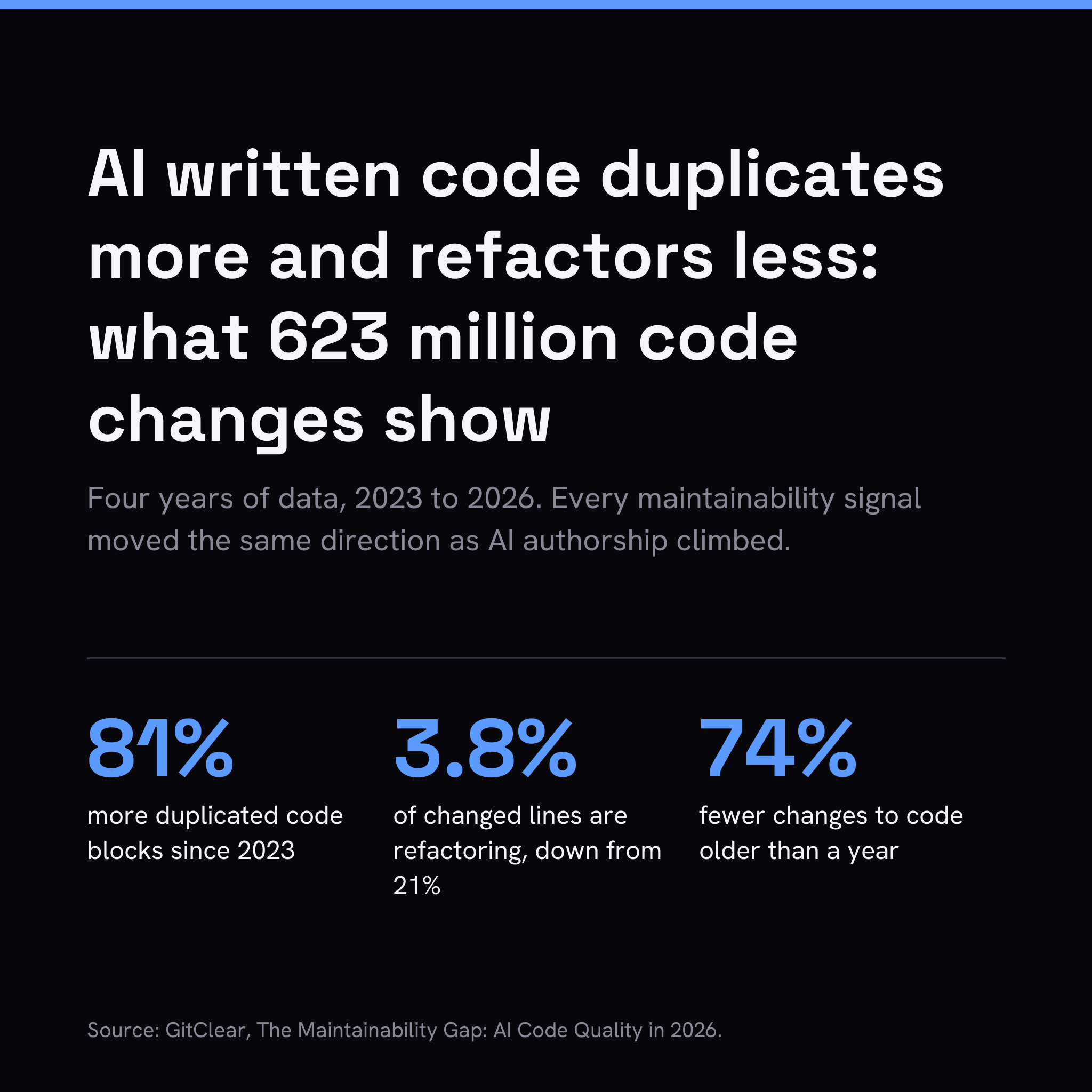 note · 2026-09-15
AI written code duplicates more and refactors less, what 623 million code changes show
Four years of code changes, 2023 to 2026, and every maintainability signal moved the same direction as AI authorship climbed. Duplicated blocks up 81%, refactoring down to 3.8% of changed lines, changes to code older than a year down 74%. The fix that changed behavior in a client team was a tripwire.
For founders and CTOs who let coding agents write code that shipsRead the note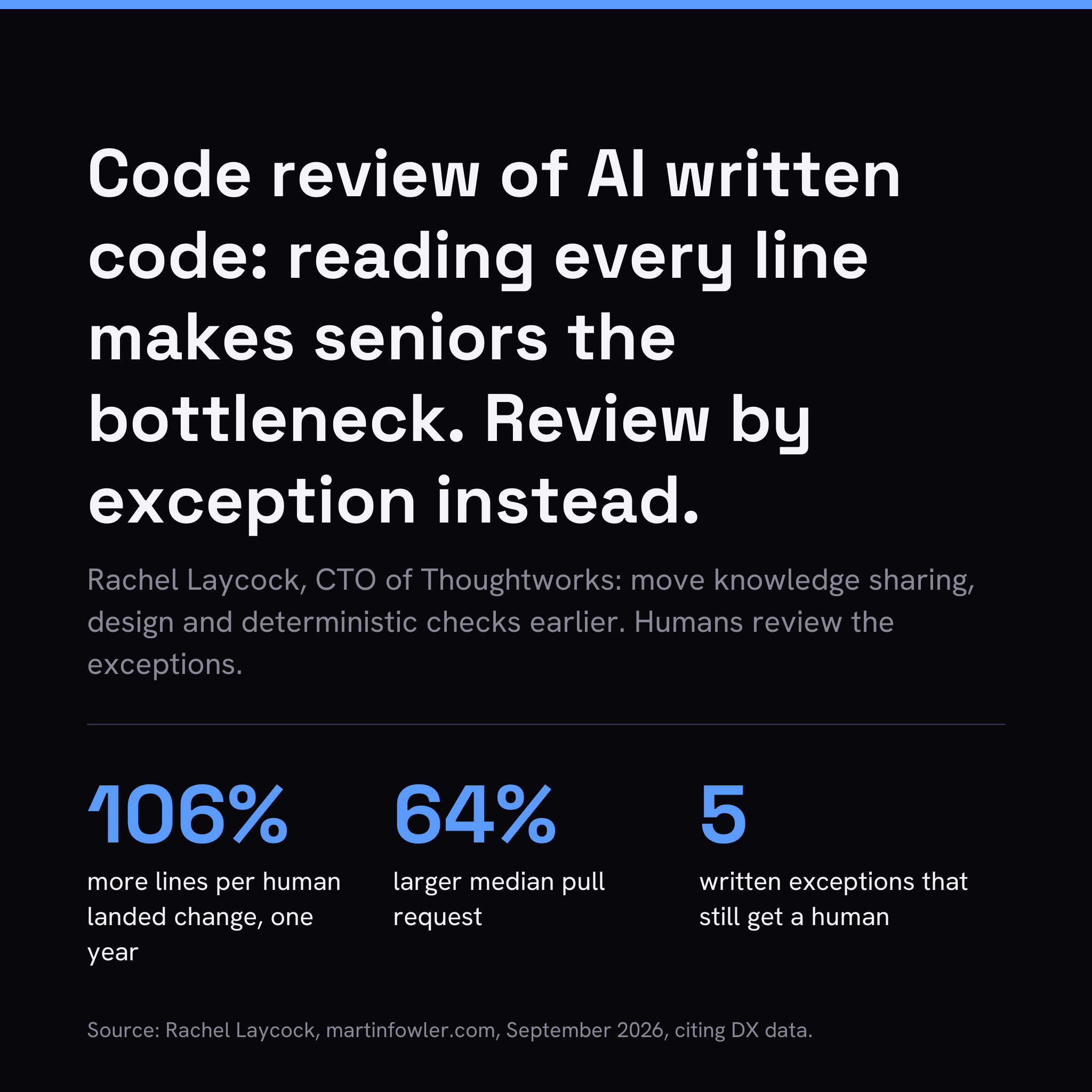 note · 2026-09-15
Code review of AI written code, review by exception instead of reading every line
When agents write most of the code, requiring a senior to read every change turns the seniors into the bottleneck. Rachel Laycock, CTO of Thoughtworks, argues for moving knowledge sharing, design and deterministic checks earlier, and reserving human review for a short written list of exceptions.
For CTOs and engineering leads whose review queue grows faster than their outputRead the note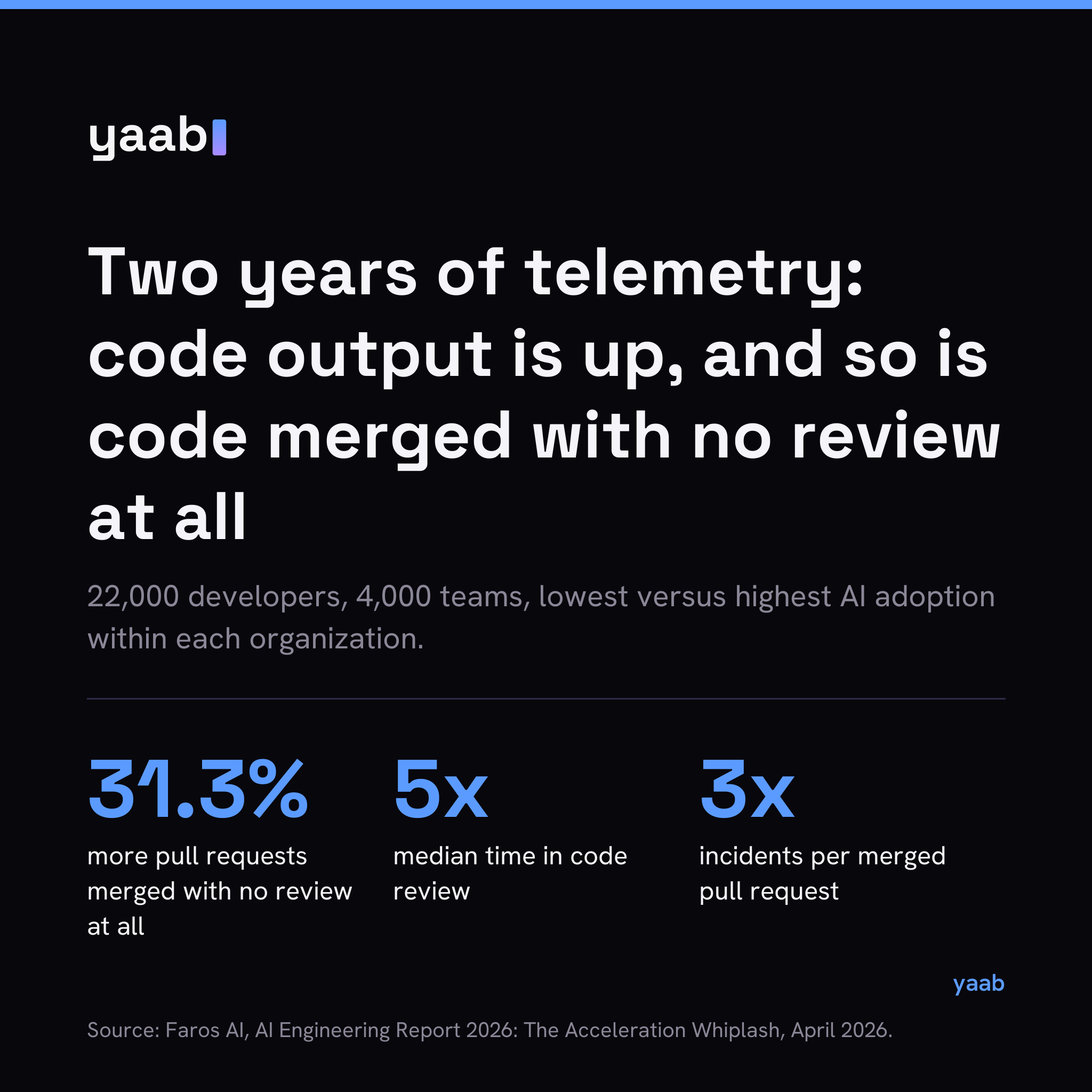 note · 2026-09-11
The number to watch is code merged with no review at all
Two years of telemetry from 22,000 developers. Output is up, review time is up 441.5%, and pull requests merged with no review at all are up 31.3%. Review is where an AI initiative is won or lost.
For CTOs and engineering leads whose review queue is growing faster than their outputRead the note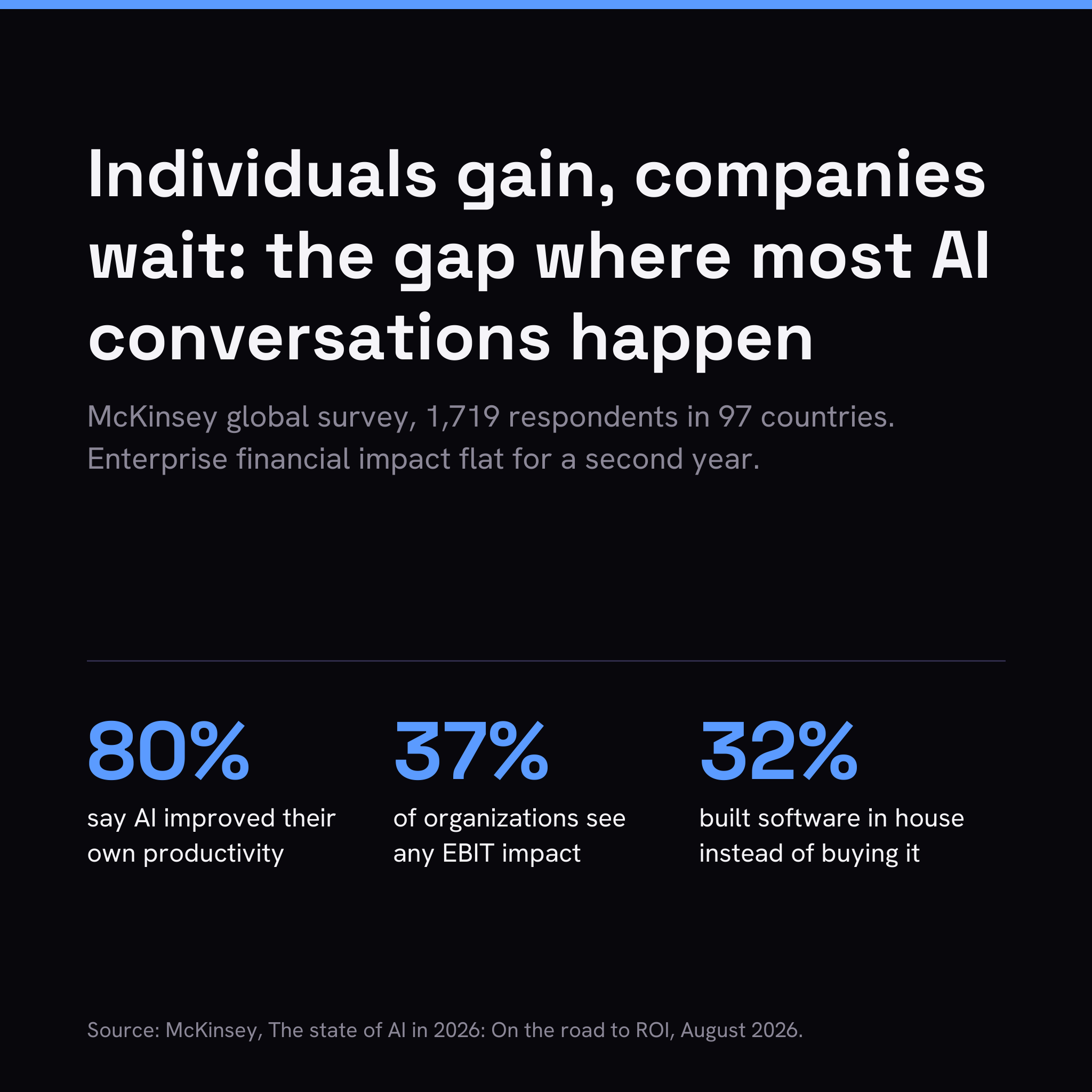 note · 2026-09-11
Eight in ten people feel more productive with AI, 37% of companies see it in earnings
McKinsey's 2026 global survey of 1,719 respondents. Individual productivity gains are near universal, the effect on EBIT has not moved, and the 6% of high performers redesign workflows instead of inserting AI into existing ones.
For IT leaders and founders whose board expects AI results the P&L does not show yetRead the note